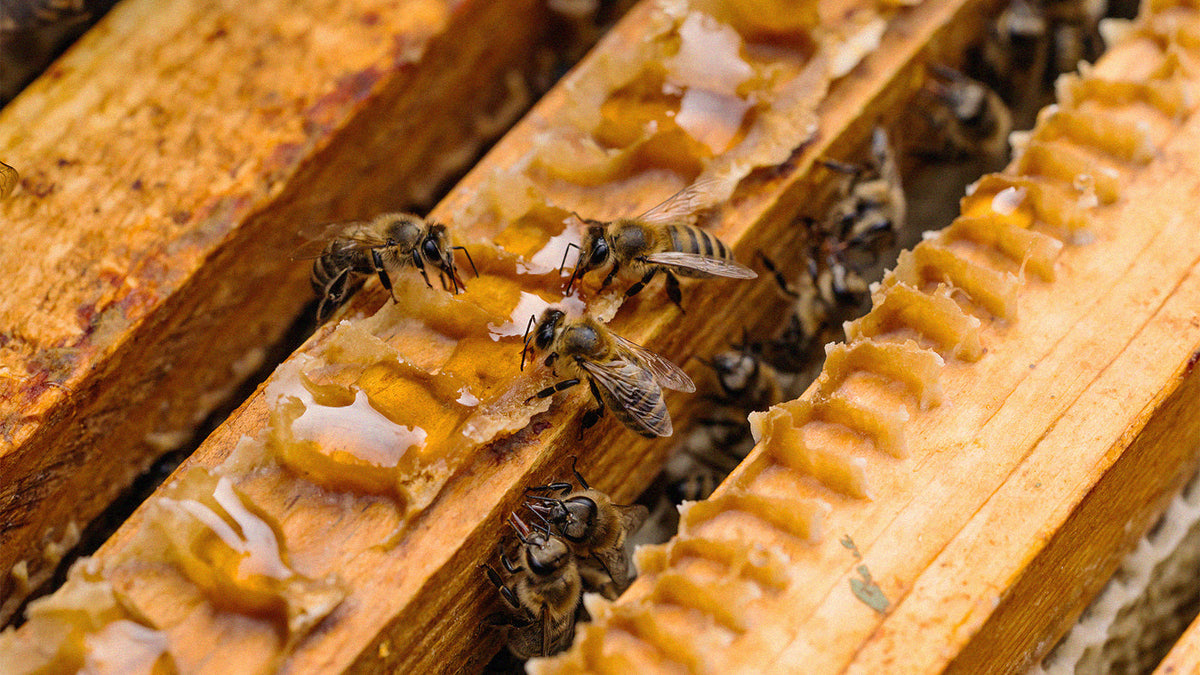
Propolis is a natural substance produced by bees from plant resins, waxes, and secretions collected from trees and plants. It has been known and appreciated for centuries for its natural properties and for its essential role within the hive, as well as for its traditional use in supporting general well-being.
What propolis is and how bees produce it
In nature, foraging bees collect resinous and waxy substances from plants, which are then processed by worker bees. The result of this transformation is propolis, a complex and highly functional substance essential to the life of the hive.
Within the colony, propolis is used to:
- line the inner walls of the hive
- seal cracks and small openings
- protect the internal environment from external agents
- polish honeycomb cells before the queen bee lays her eggs
For bees, therefore, propolis plays a crucial role in maintaining the hive’s protection and balance.
A fascinating historical connection
Thanks to its richness in bioactive compounds and natural aromatic components, propolis has also been used by humans for centuries and remains of great interest in modern scientific research and herbal medicine.
Throughout history, many civilizations have recognized its value. In ancient Egypt, for example, bees were considered divine creatures. According to the Salt Papyrus 825 (British Museum), bees were believed to have been born from the tears of the sun god Ra. This symbolism gave propolis a sacred status, and it was used in the mummification process. Traces of propolis have been found in several Egyptian mummies, including that of Tutankhamun.
Propolis composition: a complex natural substance
The composition of propolis is extremely rich and complex. Scientific research has identified over 300 active compounds, a number that continues to grow as studies progress.
Key components include:
- flavonoids (such as galangin and pinocembrin)
- B vitamins
- minerals
- amino acids
- a waxy matrix made of fatty acids
This chemical complexity is one of the reasons propolis continues to attract scientific interest and is widely used in traditional applications.
Factors influencing propolis quality
Not all propolis is the same. Its composition varies depending on several natural factors, including:
- geographic area of collection
- surrounding flora near the apiaries
- time of year
- climatic conditions
- bee species involved in production
These variables make propolis a highly heterogeneous natural product, with characteristics that differ significantly depending on its origin.
Standardized propolis: consistency and quality control
To ensure a consistent level of quality, standardized propolis (titrated propolis) has been developed. This approach allows the concentration of active compounds—
particularly flavonoids—to be precisely controlled.
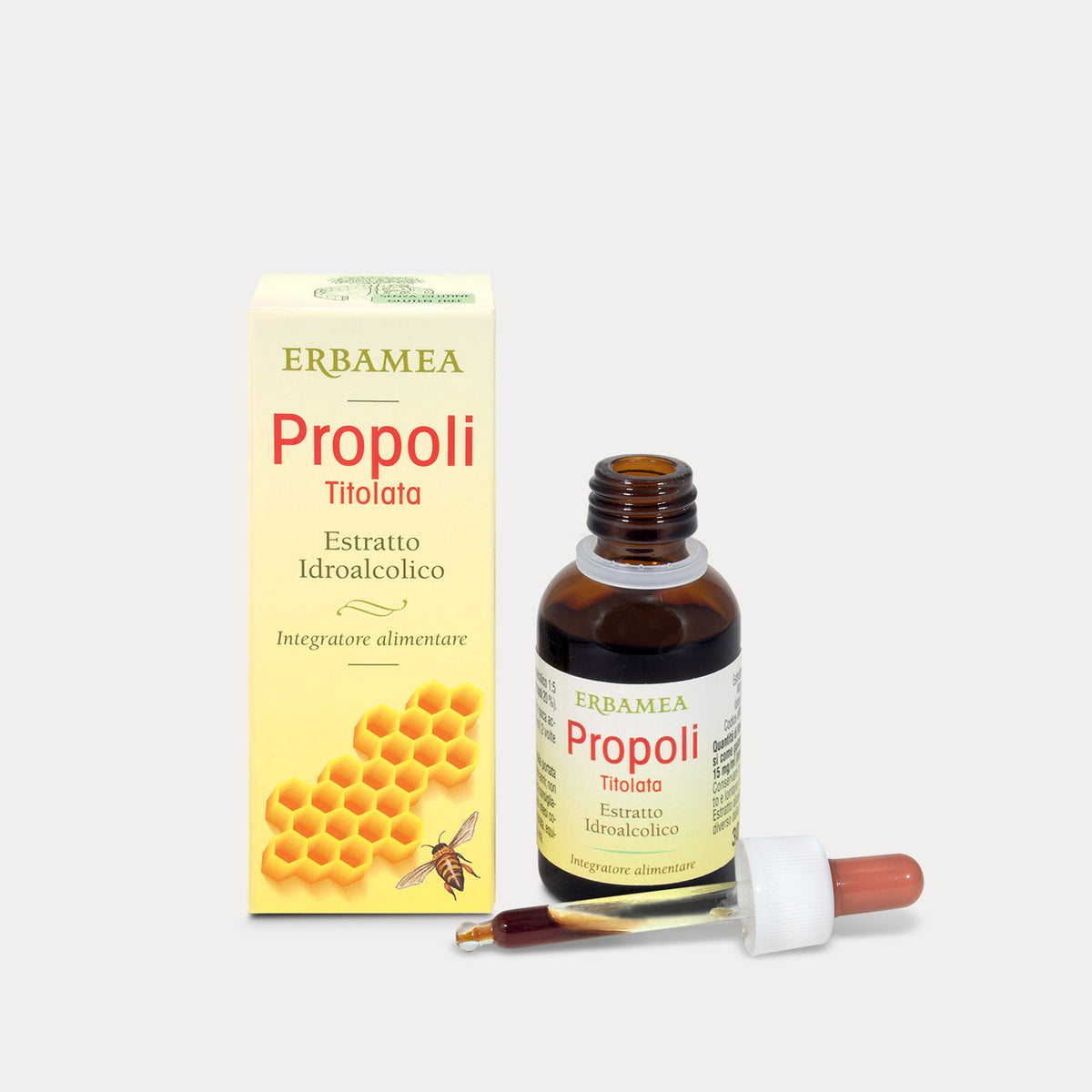
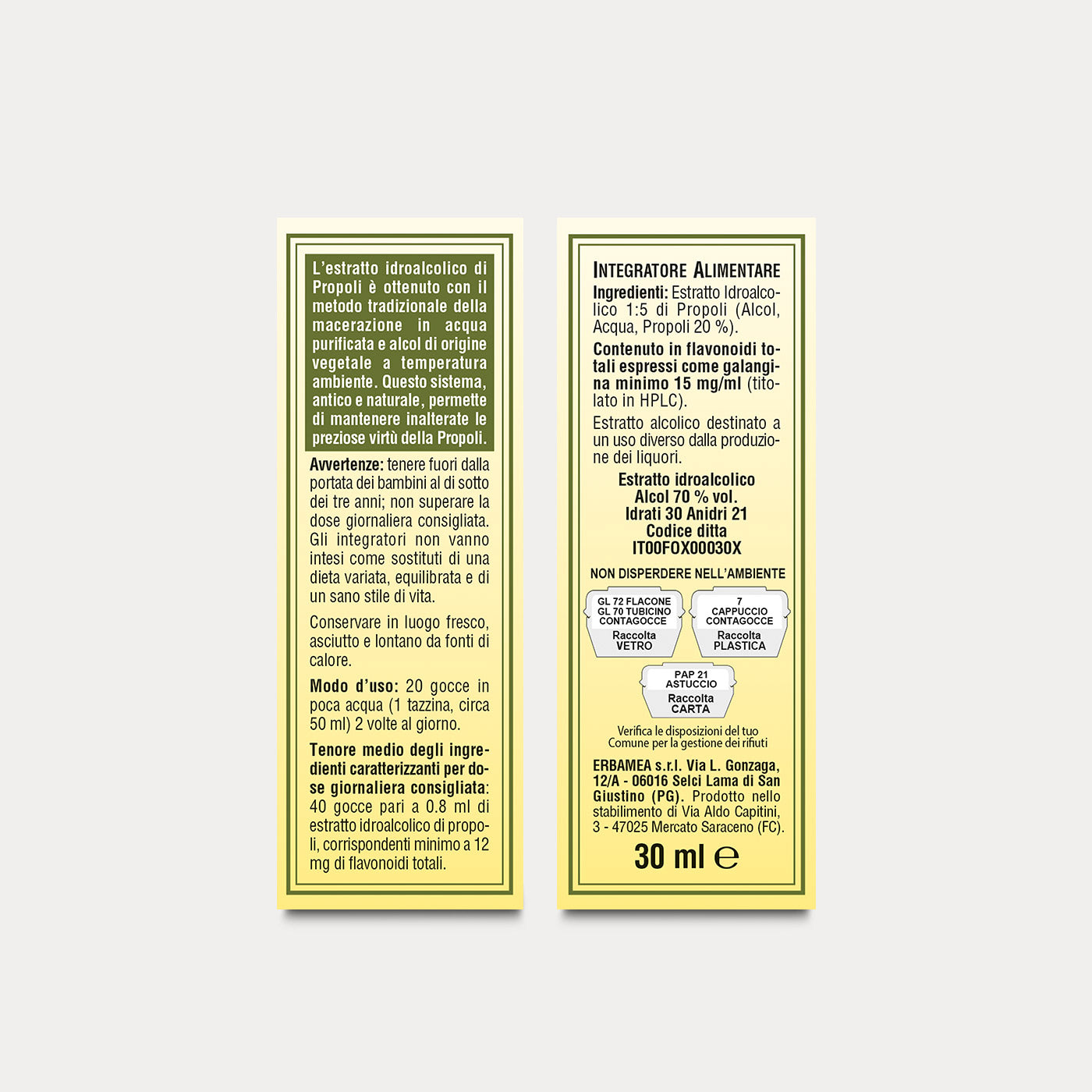
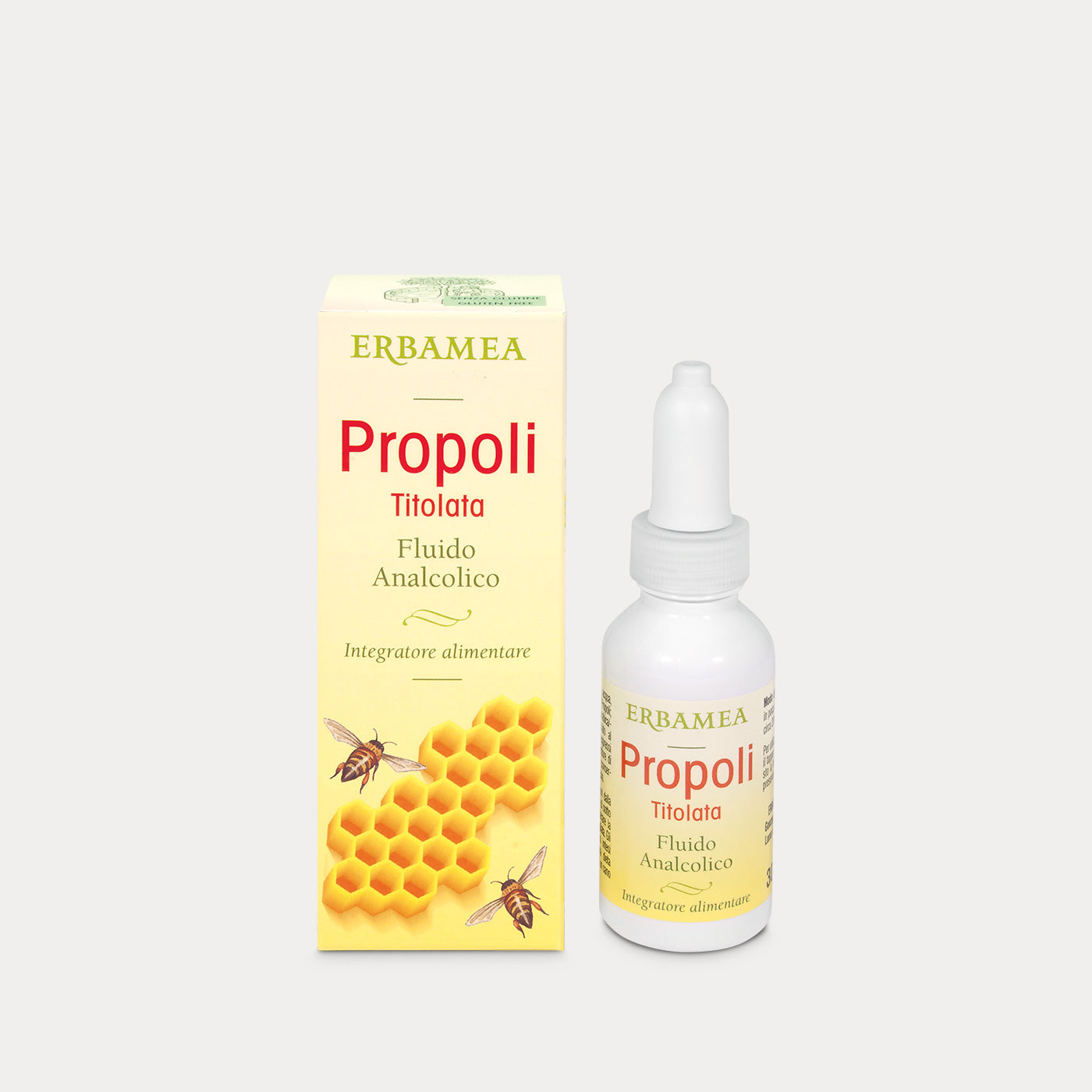
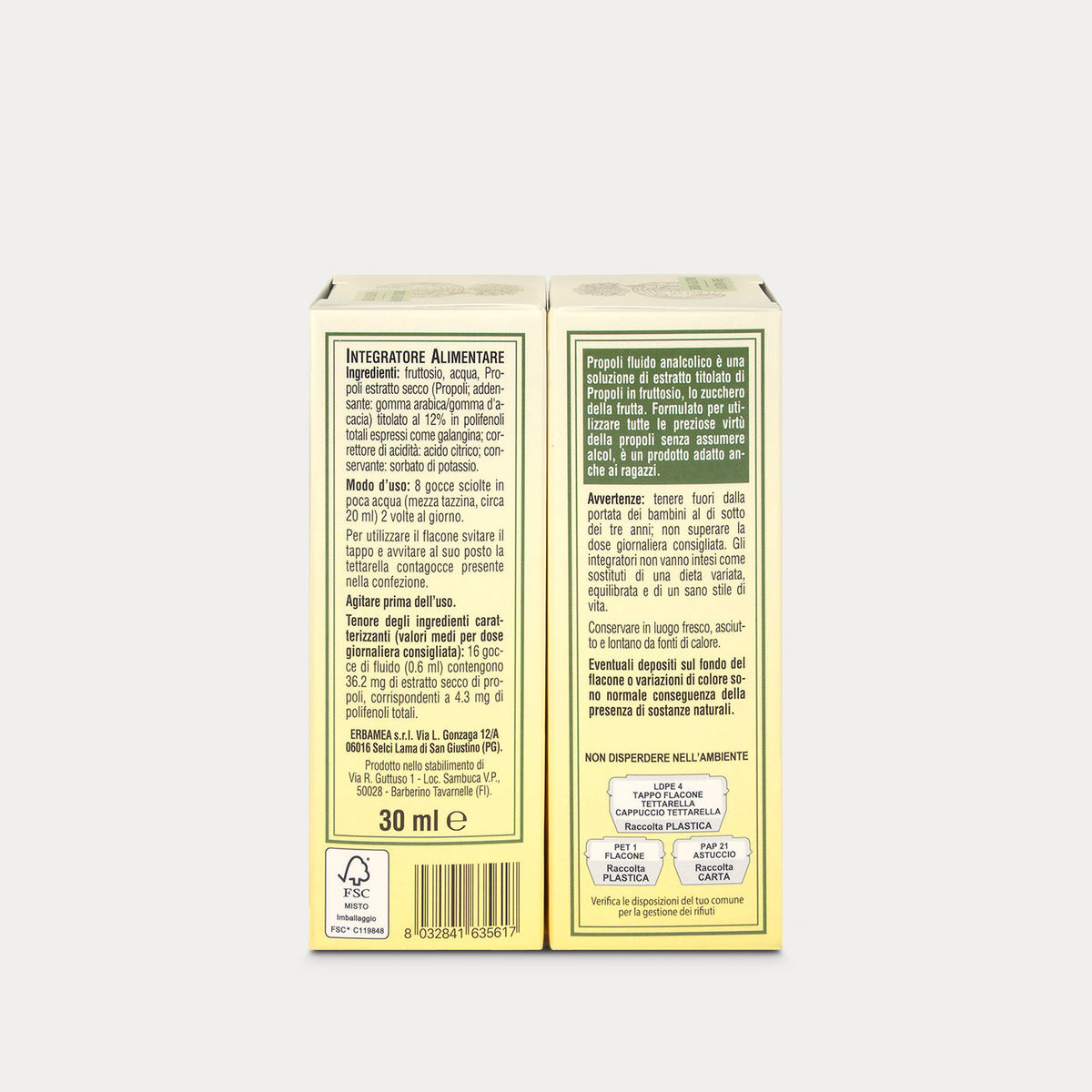
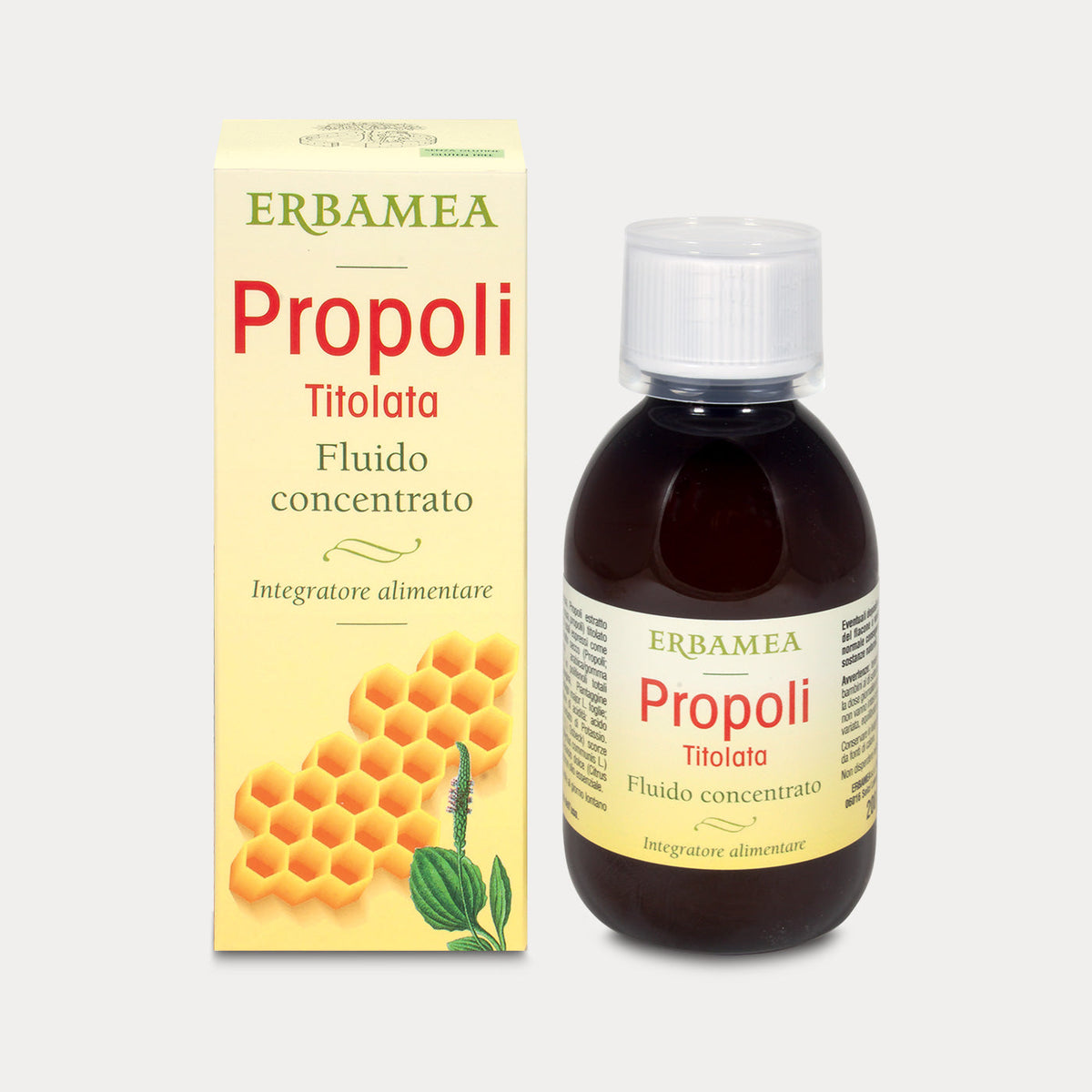
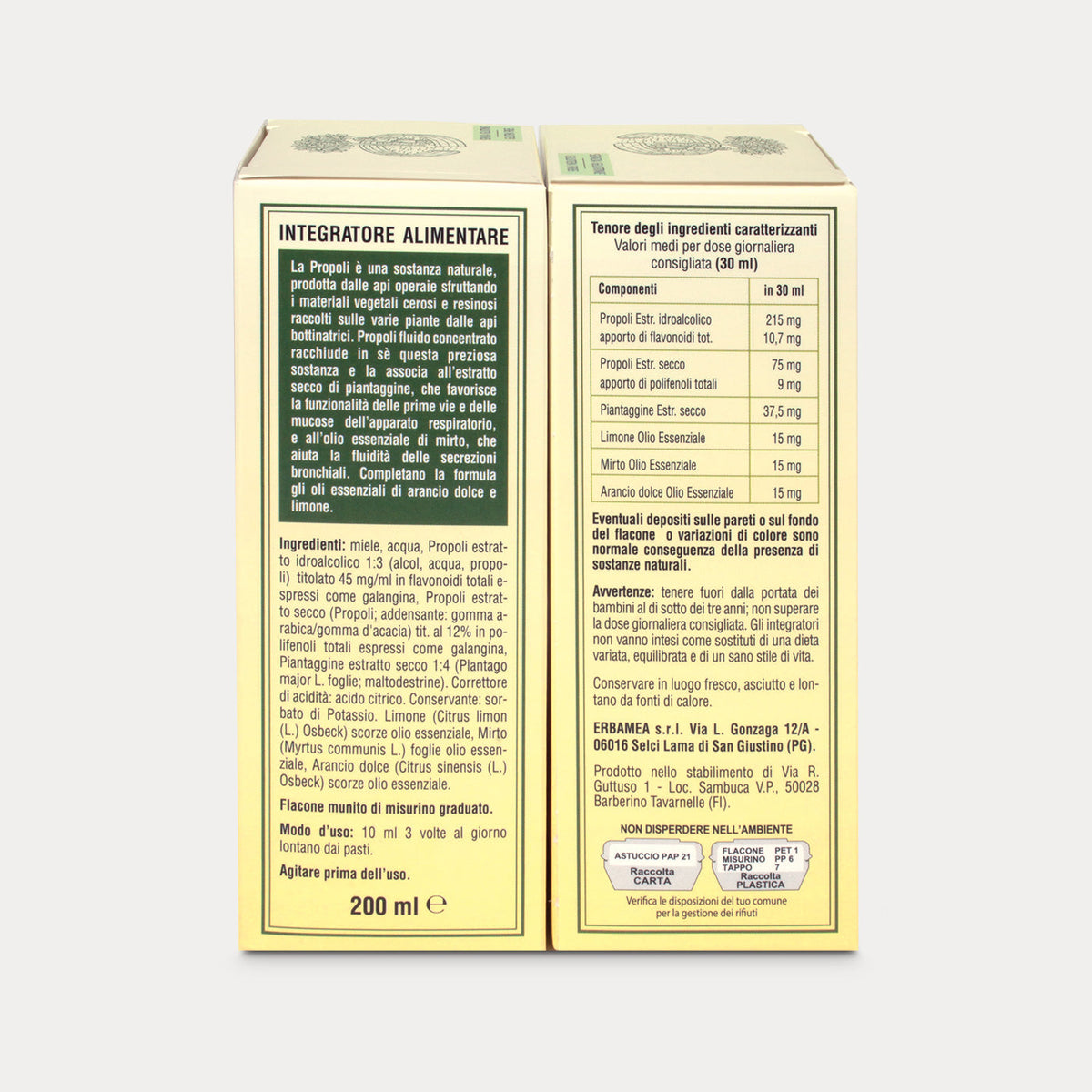
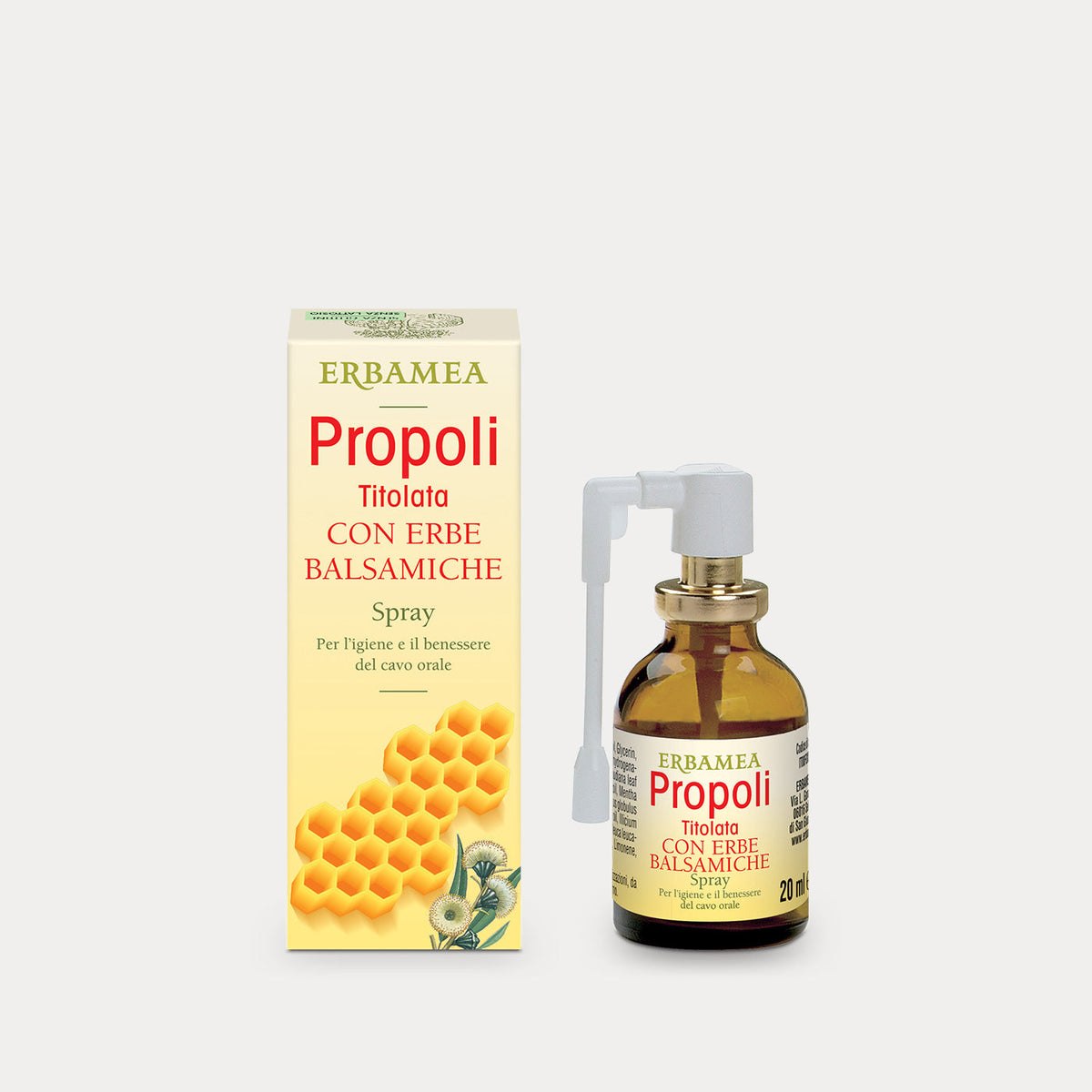
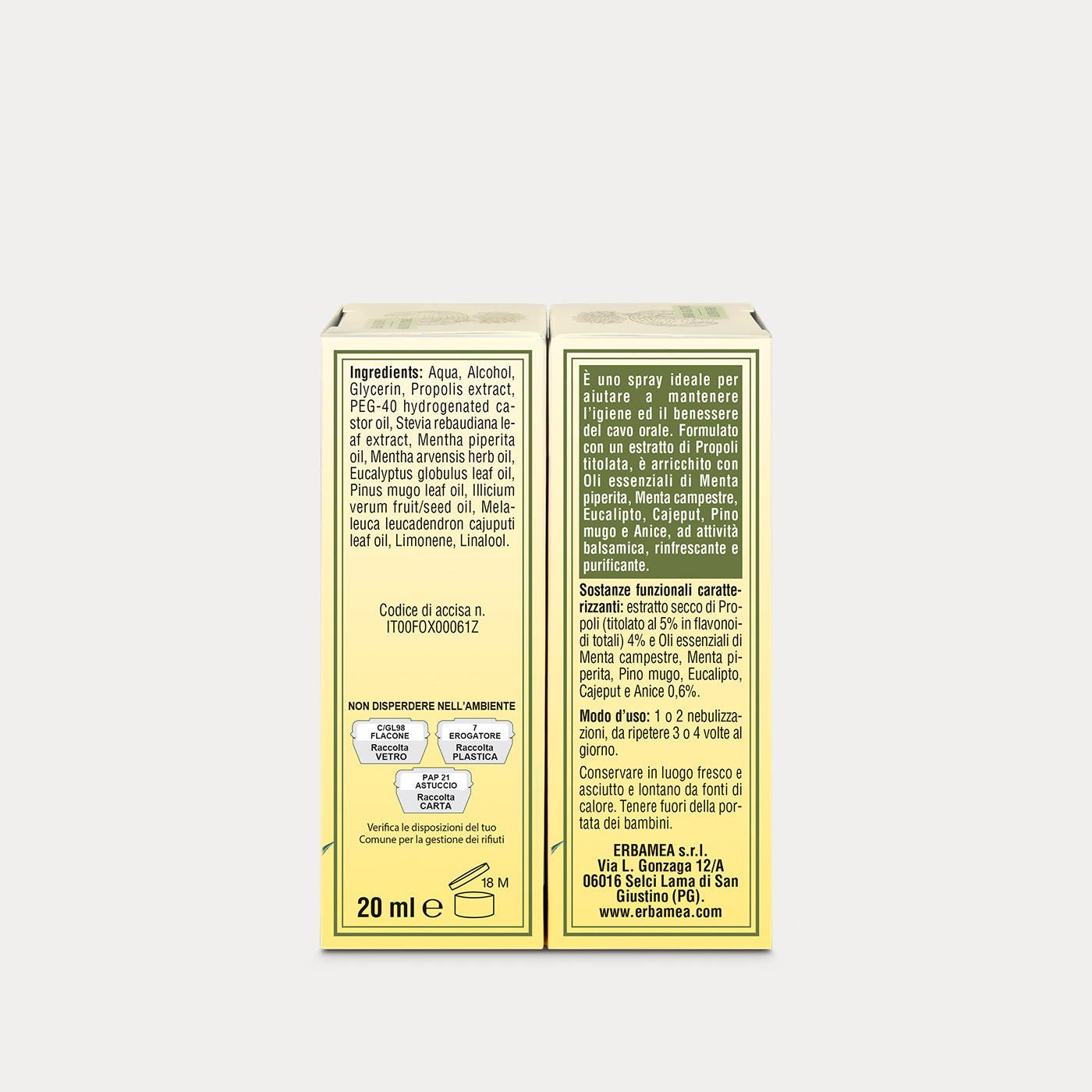
The PROPOLI TITOLATA line by Erbamea guarantees:
- controlled concentration of active ingredients
- consistent effectiveness over time
- improved repeatability of results
- standardized quality across production batches
This standardization enhances the natural properties of propolis while ensuring a high level of reliability and consistency in the final product.
Dr. Andrea Cima - Pharmacist and R&D Specialist - Erbamea