Since ancient times, people have used a wide variety of fruits and cereals – apples, pears, dates, grapes, rice, barley, etc. – to make sweet and nutritious juices. They soon realised, however, that these drinks quickly turn sour if stored in containers that are not properly sealed.
Through the action of ‘friendly bacteria’, in fact, the sugary juice undergoes natural fermentation, first turning into a slightly alcoholic liquid and subsequently into vinegar, producing distinctive aromas.
As early as 5000 BC, the Babylonians were familiar with vinegar, as were the Egyptians, Greeks and Romans, and it was not only regarded as an essential condiment in cooking but also recommended as an ‘elixir’ of well-being.
In the Middle Ages, in Mediterranean countries, most people made their own vinegar – whether for pleasure or out of necessity, for celebrations or as a remedy for everyday ailments – using wild apples, which were more readily available to everyone than grapes.
Even today, apples are used to make a tasty drink, cider, which is very popular in England, and from which apple vinegar can then be produced.
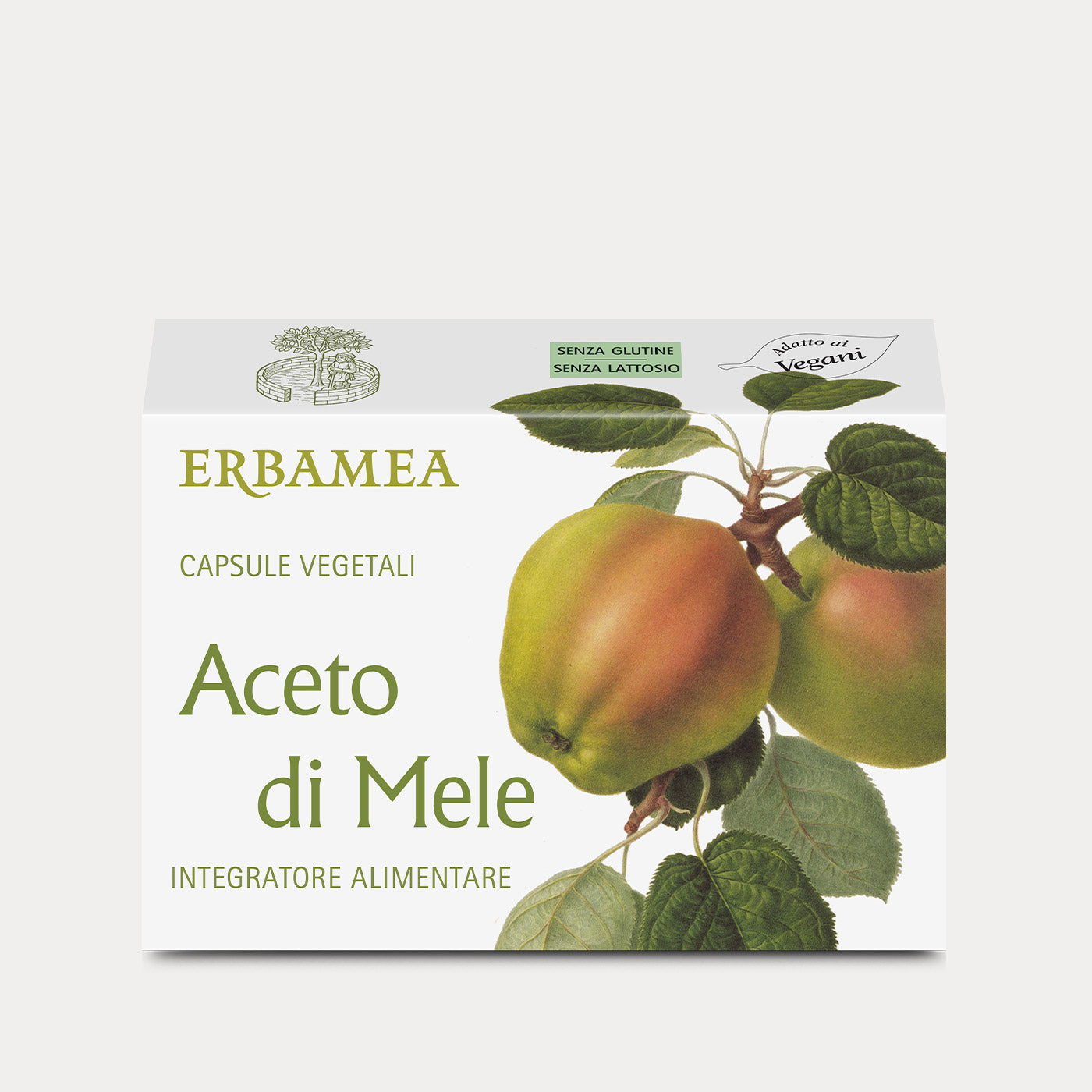
The use of vinegar for wellbeing is part of folk tradition, and its use has been passed down through the centuries to the present day. This is why Erbamea offers a supplement in vegetable capsules formulated with dehydrated apple cider vinegar powder, obtained through the fermentation of apple cider, so that we can continue to benefit from its valuable properties today.