Lactoferrin is a glycoprotein naturally found in milk and in various biological fluids of the human body. It was first discovered and isolated in 1939 from cow’s milk by the Danish chemists Peter Lauritz Sørensen and Margrethe Høyrup Sørensen, who also coined its name: “lacto” refers to milk, while “ferrin” highlights its ability to bind iron.
In recent years, lactoferrin has become an increasingly popular ingredient in the nutraceutical and dietary supplement sectors, thanks to its biological characteristics and its natural presence in the human body.
Where lactoferrin is naturally found
Lactoferrin is present in the milk of all mammals, including humans. Particularly high concentrations are found in colostrum—the first milk produced during the days immediately following childbirth.
From the very first days of life, lactoferrin naturally accompanies infants who are breastfed. However, this protein is not exclusive to infancy: it is also found in saliva, tears, nasal and bronchial mucosal secretions, as well as in white blood cells involved in the body's natural defense mechanisms.
A glycoprotein with iron-binding capacity
From a biochemical perspective, lactoferrin belongs to the transferrin family, a
group of proteins characterized by their ability to bind iron.
This property is one of the most extensively studied aspects of the molecule and has contributed significantly to the scientific interest surrounding lactoferrin in the fields of nutrition and human physiology.
Lactoferrin in dietary supplements
Today, lactoferrin is widely used in dietary supplements and is generally obtained from cow’s milk through specific extraction and purification processes.
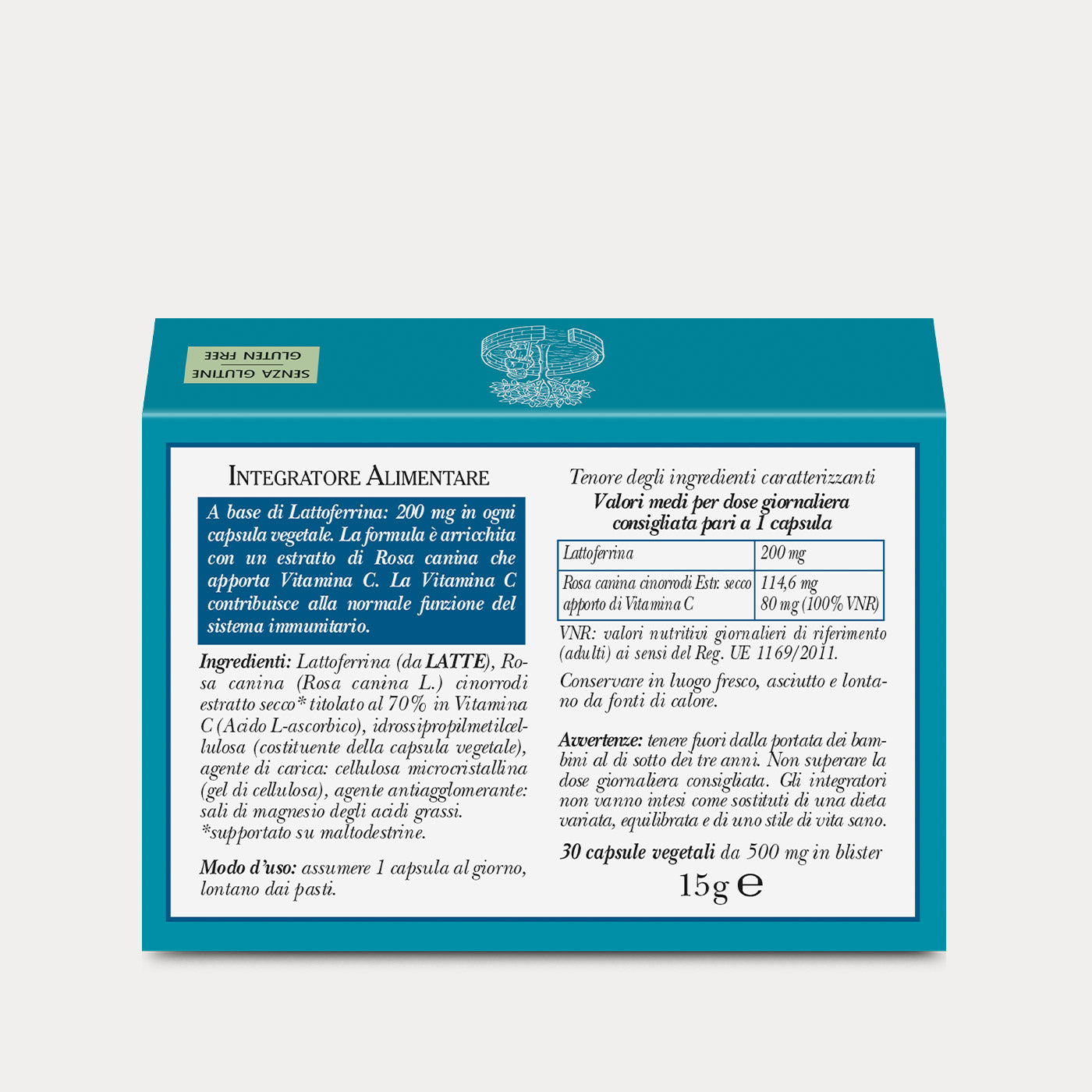
To support the body's well-being during periods when physiological balance may be challenged, Erbamea offers lactoferrin 200 mg, a dietary supplement formulated with 200 mg of natural lactoferrin per vegetable capsule.
The formula is enriched with dry extract of rosehip (Rosa canina), a natural source of Vitamin C, which contributes to the normal function of the immune system.
Quality and standardization
In dietary supplements, the quality of lactoferrin depends on several factors, including the origin of the raw material, the extraction method, and the degree of purity achieved.
As always, the selection of carefully controlled and standardized raw materials plays a key role in ensuring the quality, consistency, and reliability of the final product.
The key protein for everyday wellness
Naturally present in milk and in various biological fluids of the body, lactoferrin is now one of the best-known and most extensively studied proteins in the nutraceutical field. Thanks to its unique characteristics and its long history of use, it is widely incorporated into formulations designed to support everyday
well-being, often in combination with complementary ingredients such as
Vitamin C.
Dr. Andrea Cima - Pharmacist and R&D Specialist - Erbamea